Eden NE Represented at the High Heat Generating Waste Research Forum 2026
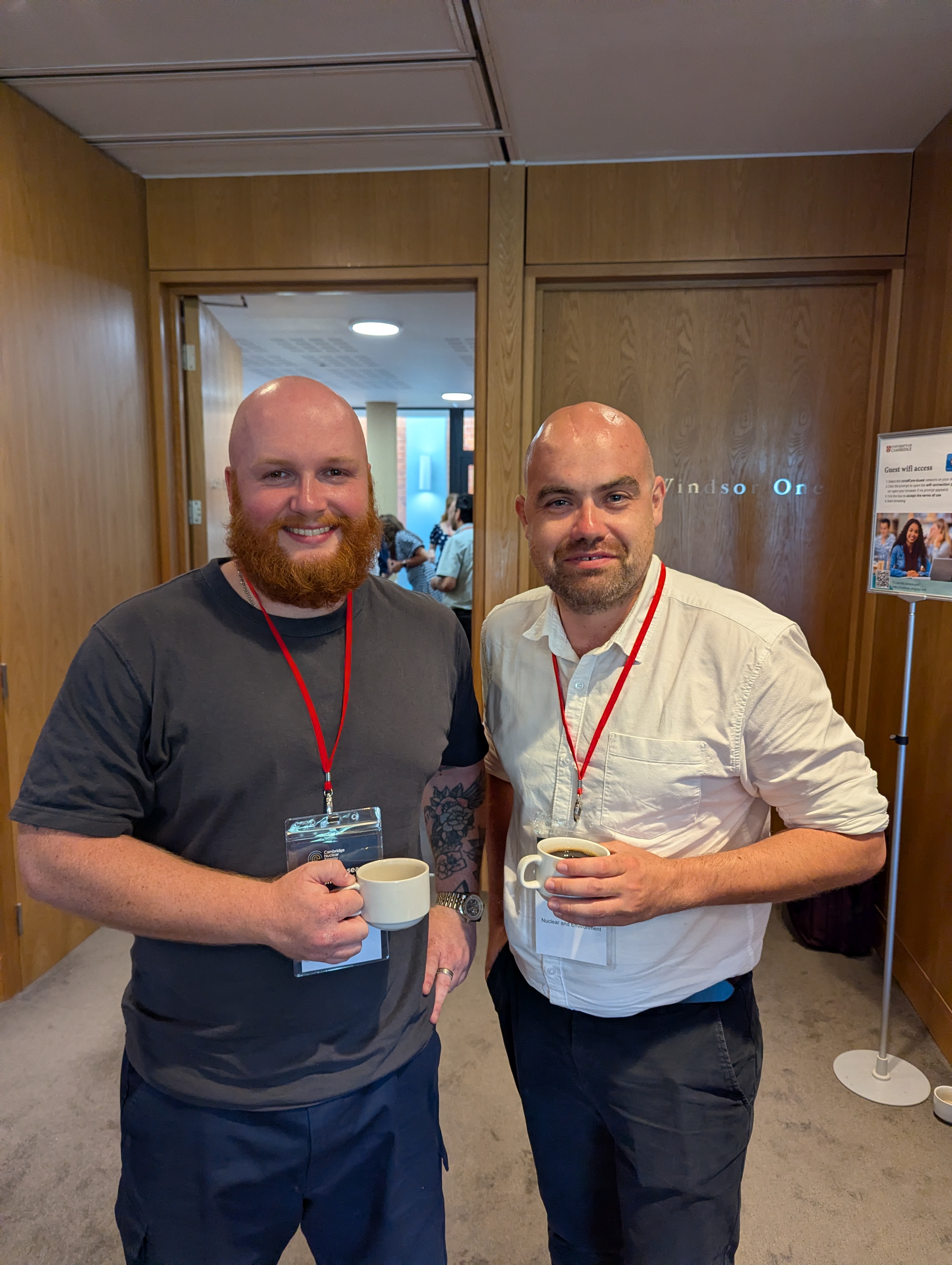
Last week, Senior Consultant James Vigor represented Eden Nuclear and Environment at the High Heat Generating Waste Research Forum 2026 at Newham College Cambridge University, joining academics and students, engineers, and industry representatives from across the UK and Europe to discuss the future of heat generating waste management.
The text below outlines his key learnings and insights gained.
"I’ve attended quite a few conferences throughout my career, and much like many of these, the technical work presented was outstanding; topics ranged from wasteform durability, corrosion, and advanced materials characterisation, through to criticality modelling, site characterisation, and plutonium disposition. I think that on the whole, everyone at the conference came away with a reminder of how far the UK’s geological disposal programme has come, and how much applied science, engineering, and technology is being used to underpin the feasibility, safety, and security, of policy.
Even though my background is fundamentally scientific, the most important part of the conference was in seeing the way that projects are starting to mesh together and how the industry is evolving, and not actually in any one piece of academic research.
An Integrating Industry
The importance (and the extent) of integration became more and more apparent across the conference. It was clear that universities are continuing to contribute research expertise and specialist facilities, that consultancies are providing technical integration across projects and are heavily collaborating with external partners, and that organisations such as Nuclear Waste Services are helping these groups focus their work where it's really needed and are playing a key role in defining policies and coordinating evidence to support programme development over the long-term.
Threads Through Nuclear
A few important threads appeared throughout the conference. Computational modelling was presented to support repository design and safety: techniques which use computing power to help solve the complex challenges we face appear to be being applied more and more often. These approaches are now supporting experimental research, strengthening the engineering decisions we are making, and improving confidence across the design life of a geological disposal facility which is going to stay safe for thousands of years.
It was also clear that site characterisation is going to become more and more important as we start to think about where we could build our facility. To achieve this and be confident in our repository environment, we need to be able to bring together information from a range geological data; information from boreholes, geophysical models, and laboratory analysis, is going to help us put together detailed information about what lies below the Earth’s surface at the depths we need to safely store our nuclear materials. However, collecting data is only part of this challenge; interpreting and integrating these results into meaningful engineering models and evidence is going to be important too.
Colleagues Past and Present
One of the most rewarding parts of the forum was the opportunity to speak face to face with people from across the sector, including people I am collaborating with now, scientists I worked with before I moved into industry, and scientists I worked on my PhD with as well. The conversations I had between sessions were just as valuable as the sessions were themselves. I was given different perspectives on how research is changing, how technical challenges are going to evolve in the future, and where the organisations working to solve this challenge are starting to focus their work to make sure the repository is safe for future generations. It was clear to me that maintaining strong relationships across academia, industry, and government, is going to be more and more important as programmes become more mature and involve more disciplines.
The Breadth of Capability
At the end of the conference, I was struck by the amount of capability that now exists across the nuclear industry from government-adjacent organisations to universities to consultancies. It feels like the sector has changed a huge amount since I started my doctorate in 2013. The scientific challenges remain significant. However, the willingness of organisations to work together to solve these remains significant too. As the Geological Disposal Facility programme continues to develop, it’s clear that progress will depend on the excellent science and engineering I saw, alongside the ability to bring different disciplines and together around a common goal.
A Note to End With
A huge thank you to all of the organisers, presenters, and everyone who spent their time sharing their work and experiences throughout the event."